

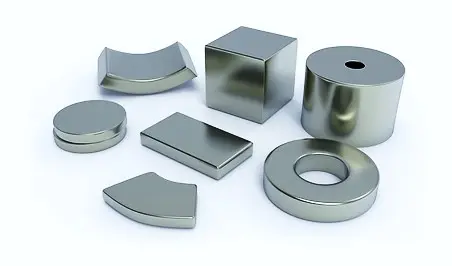
Magnetism, one of the fundamental forces of nature, has shaped much of the modern world. From the magnets that hold our refrigerator doors closed to the cutting-edge technology used in healthcare and energy systems, magnetic materials and assemblies are at the heart of numerous innovations. These materials are not only essential for existing technologies but also for driving the next wave of technological advancements. This article explores the various types of magnetic materials, their unique properties, and how they are assembled to create systems that power a wide range of industries.
1. What Are Magnetic Materials?
Magnetic materials are substances that interact with magnetic fields, either by generating their own magnetic fields or by being influenced by external ones. The magnetic properties of these materials depend on the arrangement and interaction of the atomic magnetic moments within the material. These interactions determine the material’s response to magnetic fields, and they are classified into several categories:
-
Ferromagnetic Materials: These are the most well-known magnetic materials, including iron, cobalt, and nickel. They possess strong magnetic properties and retain their magnetization once magnetized, making them ideal for creating permanent magnets. This class of materials is widely used in electric motors, transformers, hard disk drives, and many other devices.
-
Paramagnetic Materials: Materials such as aluminum and platinum are weakly attracted to magnetic fields but do not retain magnetization once the external field is removed. These materials are used in applications where weak, temporary magnetic effects are needed, such as in certain types of sensors.
-
Diamagnetic Materials: These materials create a weak, repulsive force when exposed to a magnetic field. While their magnetic response is generally weak, they are important for shielding sensitive electronics from external magnetic interference. Examples include copper, graphite, and bismuth.
-
Ferrimagnetic Materials: Found in materials like ferrites, ferrimagnetic substances have properties similar to ferromagnetic materials but with opposing magnetic moments that do not completely cancel each other out. These materials are used in high-frequency applications like inductors, transformers, and microwave devices due to their high magnetic permeability and low electrical conductivity.
-
Antiferromagnetic Materials: These materials exhibit opposing magnetic moments at the atomic level, which cancel each other out on a macroscopic scale. Though they do not retain magnetization, they are useful in specialized fields like spintronics, which exploits electron spin for information processing.
2. Core Magnetic Properties of Materials
Several fundamental properties govern how magnetic materials behave, influencing their performance and suitability for various applications:
-
Magnetic Permeability: This property measures how easily a material can be magnetized in the presence of an external magnetic field. Materials with high permeability, such as iron, are used in transformers and inductors to efficiently channel magnetic flux.
-
Coercivity: Coercivity is the measure of a material’s resistance to being demagnetized. High-coercivity materials, such as rare-earth magnets, maintain their magnetization even in the presence of opposing magnetic fields. These are crucial in permanent magnets, which are used in everything from hard drives to motors.
-
Saturation Magnetization: Saturation magnetization refers to the maximum magnetization that can be achieved in a material. Once a material is saturated, increasing the magnetic field further will not increase its magnetization. This property is key in designing strong magnets and optimizing their use in applications.
-
Curie Temperature: The Curie temperature is the temperature at which ferromagnetic materials lose their magnetic properties and transition into a paramagnetic state. Understanding and managing the Curie temperature is essential in applications exposed to high temperatures, such as in power plants or engines.
-
Remanence: Remanence is the residual magnetization left in a material after an external magnetic field is removed. Permanent magnets rely on high remanence to maintain their strength over long periods, which is critical in devices like speakers and motors.
3. Magnetic Assemblies: Complex Systems of Magnetic Materials
Magnetic assemblies refer to systems in which multiple magnetic components work together to perform a specific task, such as generating, controlling, or using magnetic fields. By combining different magnetic materials in a particular configuration, engineers can achieve enhanced performance for various applications. Some common magnetic assemblies include:
-
Permanent Magnets: These magnets retain their magnetic properties indefinitely and do not require an external power source. They are made from materials with high coercivity and remanence, such as neodymium and samarium-cobalt. Permanent magnets are found in a wide range of devices, including motors, speakers, and sensors.
-
Electromagnets: Electromagnets consist of a coil of wire wound around a magnetic core. When an electric current passes through the coil, it generates a magnetic field. The strength of the field can be controlled by adjusting the current. Electromagnets are used in applications that require a controllable magnetic field, such as in motors, solenoids, and magnetic cranes.
-
Magnetic Sensors: These sensors detect changes in magnetic fields and convert them into electrical signals. They are used in a variety of applications, including in automotive systems for detecting wheel speed, in smartphones for compass functionality, and in industrial equipment for position and proximity sensing.
-
Transformers and Inductors: Magnetic assemblies are central to the operation of transformers and inductors. Transformers use magnetic materials to transfer electrical energy between circuits, while inductors store energy in a magnetic field. Both components rely on magnetic properties to regulate electrical currents and voltages efficiently.
-
Magnetic Shields: Magnetic shielding materials protect sensitive electronics from interference caused by external magnetic fields. These materials, often made of high-permeability metals like mu-metal, absorb and redirect magnetic flux to prevent it from affecting nearby components. Magnetic shields are critical in devices such as hard drives, MRI machines, and scientific instruments.
4. Applications of ndfeb magnet
Magnetic materials and assemblies are ubiquitous in modern technology, with applications spanning multiple industries. Here are some key sectors where magnetic materials play a critical role:
-
Data Storage: Magnetic materials are essential in data storage devices such as hard disk drives (HDDs) and magnetic tapes. In these devices, data is encoded by magnetizing small regions of a disk or tape. As data storage needs continue to grow, advances in magnetic materials are driving the development of faster, higher-capacity storage solutions.
-
Medical Imaging: Magnetic materials are used extensively in medical imaging, particularly in magnetic resonance imaging (MRI) systems. MRI machines use powerful magnets to generate strong magnetic fields that interact with the hydrogen atoms in the body, producing detailed images of internal structures. Superconducting magnets, which operate without electrical resistance, are often used in MRI scanners for their ability to create high-strength and stable magnetic fields.
-
Electric Motors and Generators: Magnetic materials are essential in electric motors, which convert electrical energy into mechanical motion. Magnets generate the magnetic fields necessary to drive the motor’s motion. Similarly, in generators, mechanical motion is converted into electricity by rotating a magnet within a coil of wire. The interaction of magnetic fields and electrical current is central to both of these technologies.
-
Transportation: One of the most promising applications of magnetic materials is in magnetic levitation (maglev) trains. Maglev trains use powerful magnets to levitate and propel the train, reducing friction and allowing for high-speed travel. Magnetic materials are also used in electric vehicle (EV) motors, where they contribute to the efficiency and performance of these environmentally friendly transportation systems.
-
Consumer Electronics: Many everyday devices, including smartphones, laptops, and headphones, rely on magnetic materials for their operation. Small permanent magnets are used in speakers, microphones, and vibration motors, while magnetic sensors are used for functions such as orientation detection and motion sensing.
5. The Future of Magnetic Materials and Assemblies
The future of magnetic materials is filled with exciting possibilities. As technology continues to evolve, so too do the demands placed on magnetic materials. Here are some emerging trends and areas of research:
-
Nanomagnetic Materials: The development of magnetic materials at the nanoscale is opening up new possibilities for miniaturized devices with enhanced performance. Nanomagnetic materials are being explored for use in high-density data storage, advanced sensors, and quantum computing technologies. The ability to manipulate materials at the atomic scale could lead to significant advancements in a wide range of industries.
-
Superconducting Magnets: Superconducting magnets, which can carry current without any loss of energy, are being researched for applications in energy storage, particle accelerators, and transportation. Advances in high-temperature superconductors could make these magnets more practical and affordable for widespread use in various technologies.
-
Magnetic Energy Storage: Magnetic materials are being explored for use in energy storage systems, particularly for renewable energy applications. Magnetic flywheels and other magnetic energy storage technologies could offer an efficient and sustainable way to store and release energy, helping to stabilize energy grids that rely on intermittent renewable energy sources like wind and solar.
-
Spintronics: Spintronics is an emerging field that exploits the spin of electrons in addition to their charge for information processing. Magnetic materials are essential to spintronic devices, which could lead to faster and more energy-efficient electronic circuits. Spintronic technologies are also being investigated for use in quantum computing, which promises to revolutionize data processing and storage.
Conclusion
Magnetic materials and assemblies are indispensable in the development of many critical technologies that define the modern world. From the fundamental workings of motors and data storage devices to advanced applications in medical imaging and transportation, magnetism plays a pivotal role in shaping our technological landscape. As research in magnetic materials advances, we can expect even greater breakthroughs in fields such as quantum computing, energy storage, and spintronics. With their broad range of applications and ongoing innovations, magnetic materials will continue to be at the forefront of technological progress.

Leave a Reply